Download our Most Trusted Brands 2026 report here for the definitive ranking of the brands that lead the way on consumer trust — spanning 184 brands across 30 rankings.
EXECUTIVE SUMMARY
-
NO RALLY EFFECT: Trump approval (44%-53%) and his foreign policy approval (43%-52%) are unchanged from pre-strike baselines. The strikes have not moved his numbers immediately.
-
NATION SPLIT: 41% of registered voters say strikes necessary vs. 42% who prefer diplomacy.
-
CONGRESS QUESTION: 51% say Trump should have sought congressional approval, including 21% of Republicans.
-
DURATION DIVIDE: 55% of GOP support involvement in Iran for “as long as it takes.” 44% of Democrats say the U.S. shouldn’t be involved. Independents lean towards non-involvement.
-
ECONOMIC VULNERABILITY: 63% are concerned about gas prices
-
WAR FEARS: 60% see full-scale war as at least somewhat likely
- METHODOLOGY: Morning Consult's analysis reflects data gathered on Feb. 28, 2026 among 1,618 registered U.S. voters with a margin of error of +/ 2 percentage points.
The majority of registered voters are concerned about full-scale war with Iran as a result of recent attacks, according to a new survey by Morning Consult.
The public is watching the conflict with Iran closely and with real concern about where it's headed. Voters are divided, with more voters than not viewing them as necessary to counter Iran's nuclear threat. But the Trump administration's support here is conditional: If higher gas prices and the cost of living become the dominant frame, the numbers move against Republicans. At the same time, most voters say Donald Trump should have gone to Congress before the strikes, but that hasn’t yet had an effect on his approval rating or foreign policy numbers.
Nation Split on Whether Iran Strike Was Necessary
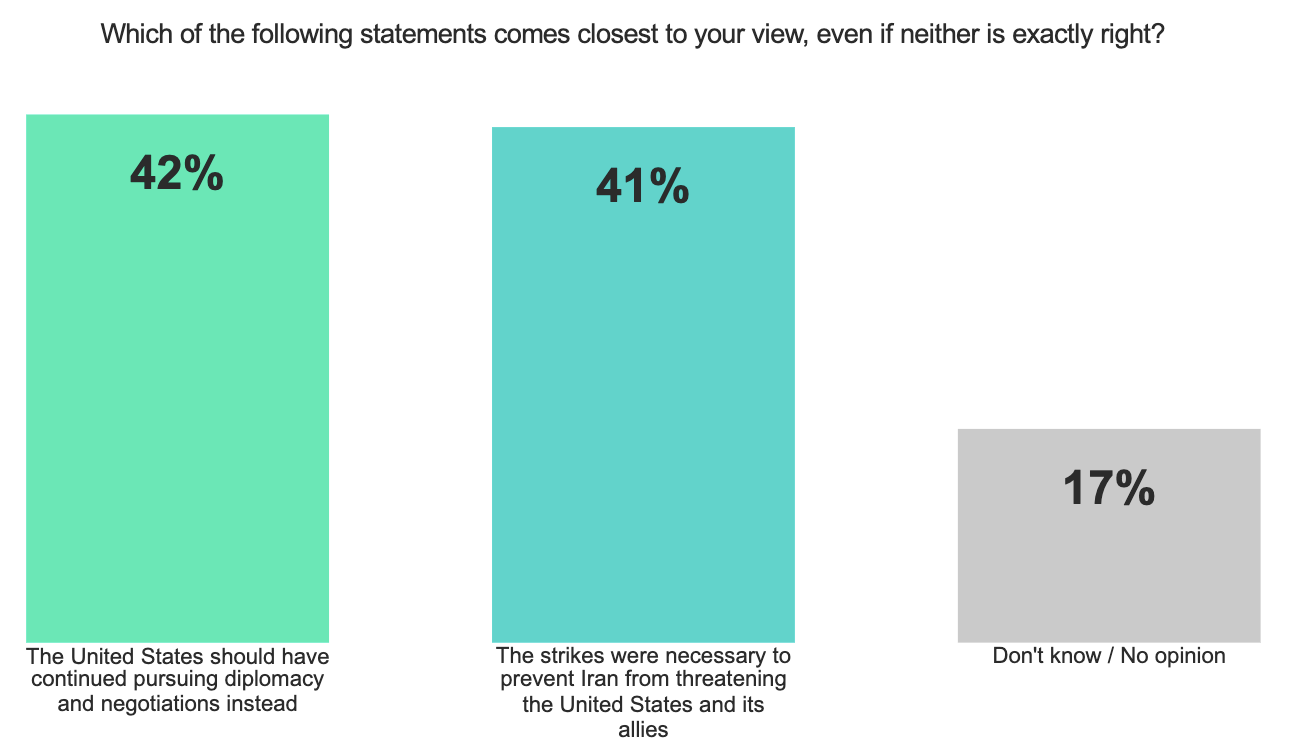
Americans are nearly evenly divided on whether the Iran strikes were the right call. Among registered voters, 41% say the strikes were necessary to prevent Iran from threatening the U.S. and its allies, while 42% believe the United States should have continued pursuing diplomacy and negotiations instead. Independents tilt toward diplomacy by a 47%-32% margin.
The partisan gap is stark: Republicans overwhelmingly back the strikes as necessary, while Democrats and independents lean toward the view that diplomacy should have been tried first.
Majority of Registered Voters Say Trump Should Have Sought Congressional Approval
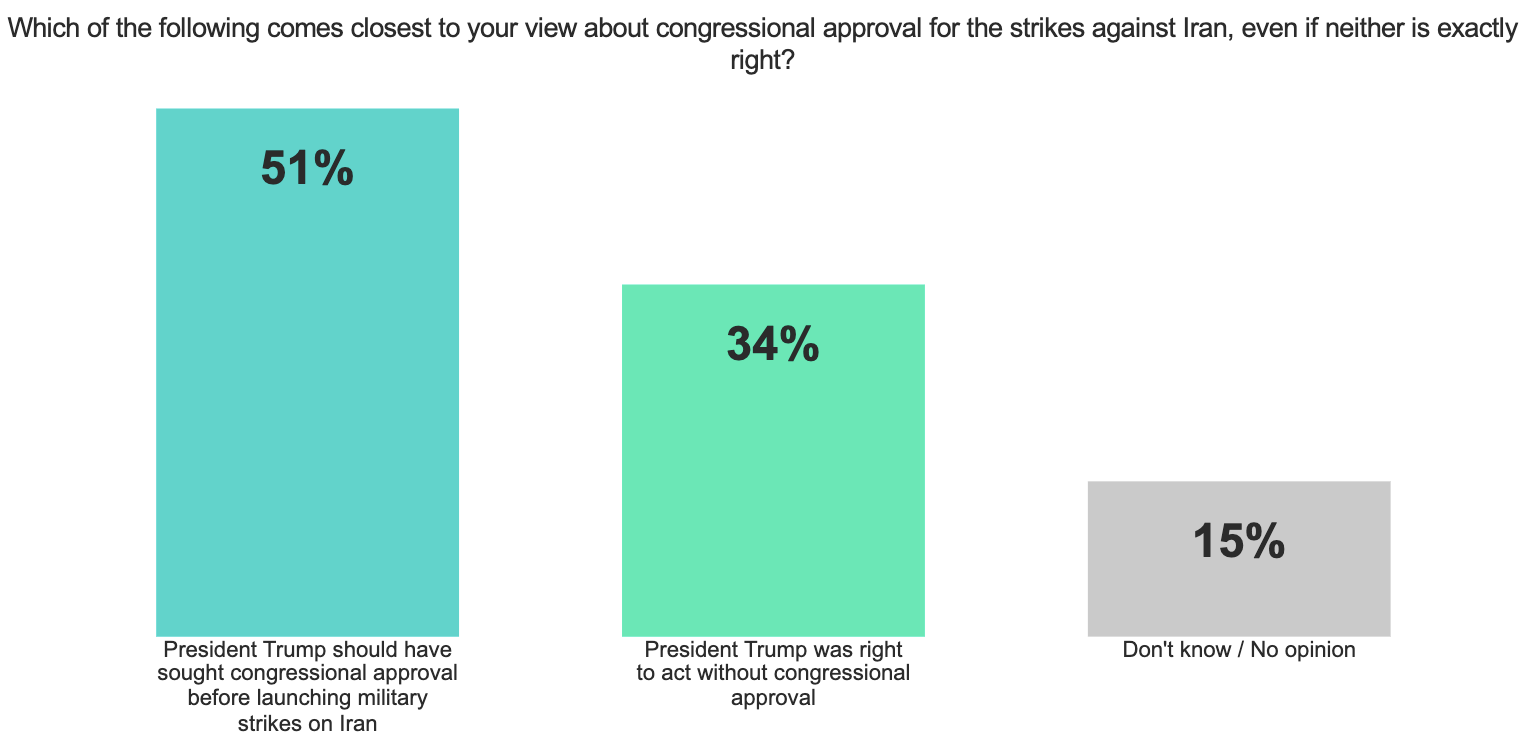
Voters across party lines express some concern about the lack of congressional authorization — including 21% of Republicans — suggesting that even among supporters of the strikes, questions of process and constitutional authority resonate broadly.
Republican Voters Say U.S. Should Be Willing to Sustain Military Operations in Iran for 'As Long As It Takes,' but Other Groups Are Less Committed
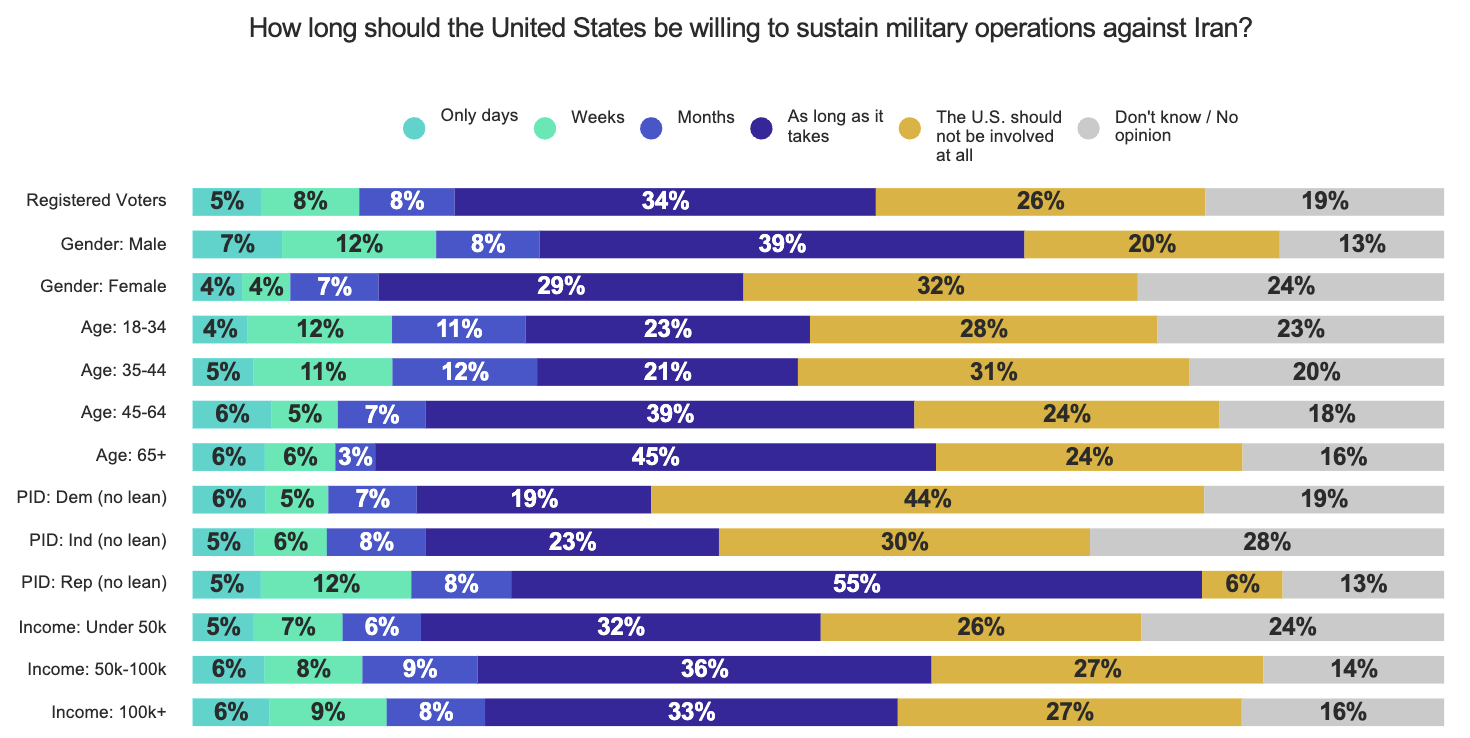
Republicans are the only group with majority support for open-ended military engagement: 55% say the U.S. should stay involved "as long as it takes." By contrast, 44% of Democrats say the U.S. should not be involved at all, and independents lean similarly toward non-involvement. Older voters (65+) show the strongest appetite for sustained operations among age groups, with 45% favoring engagement for as long as necessary.
Voters Are Concerned About Gas Prices
When Cost Concerns Are Made Explicit, Voters Become Less Interested in a Prolonged Conflict
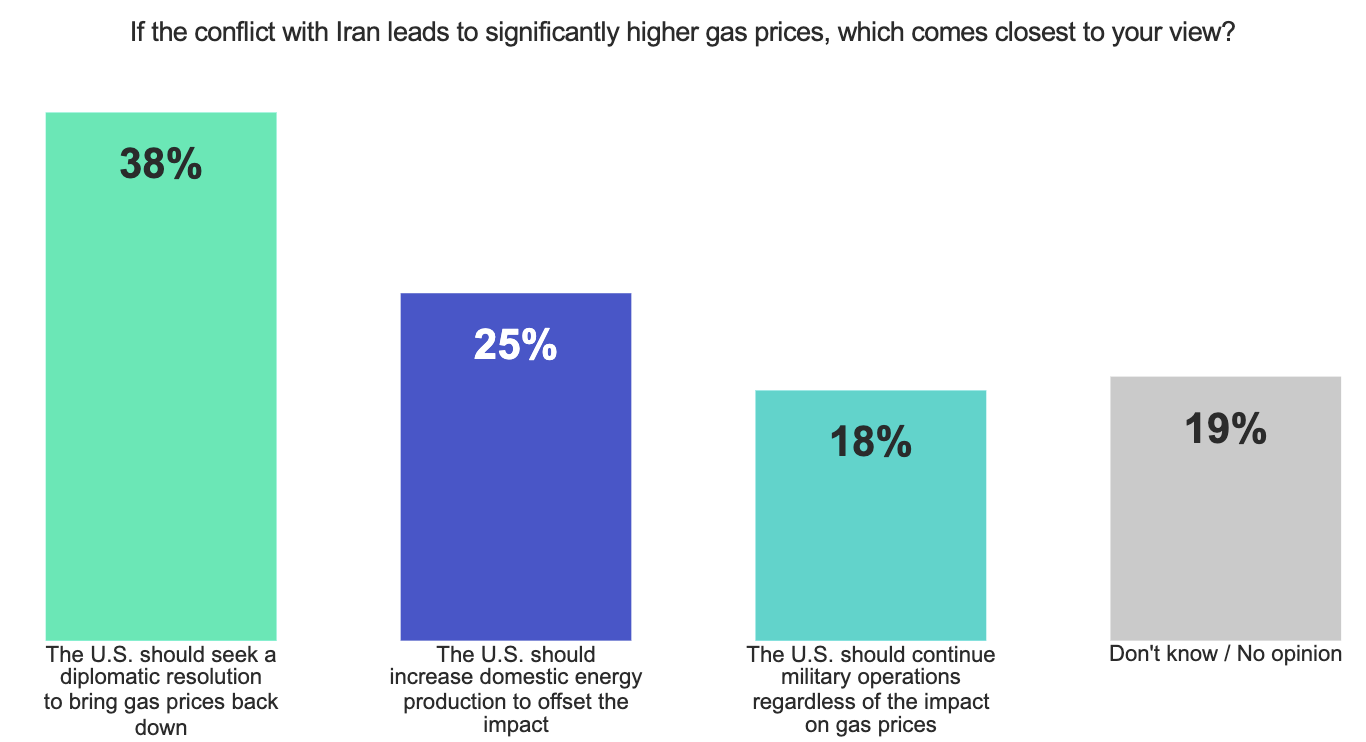
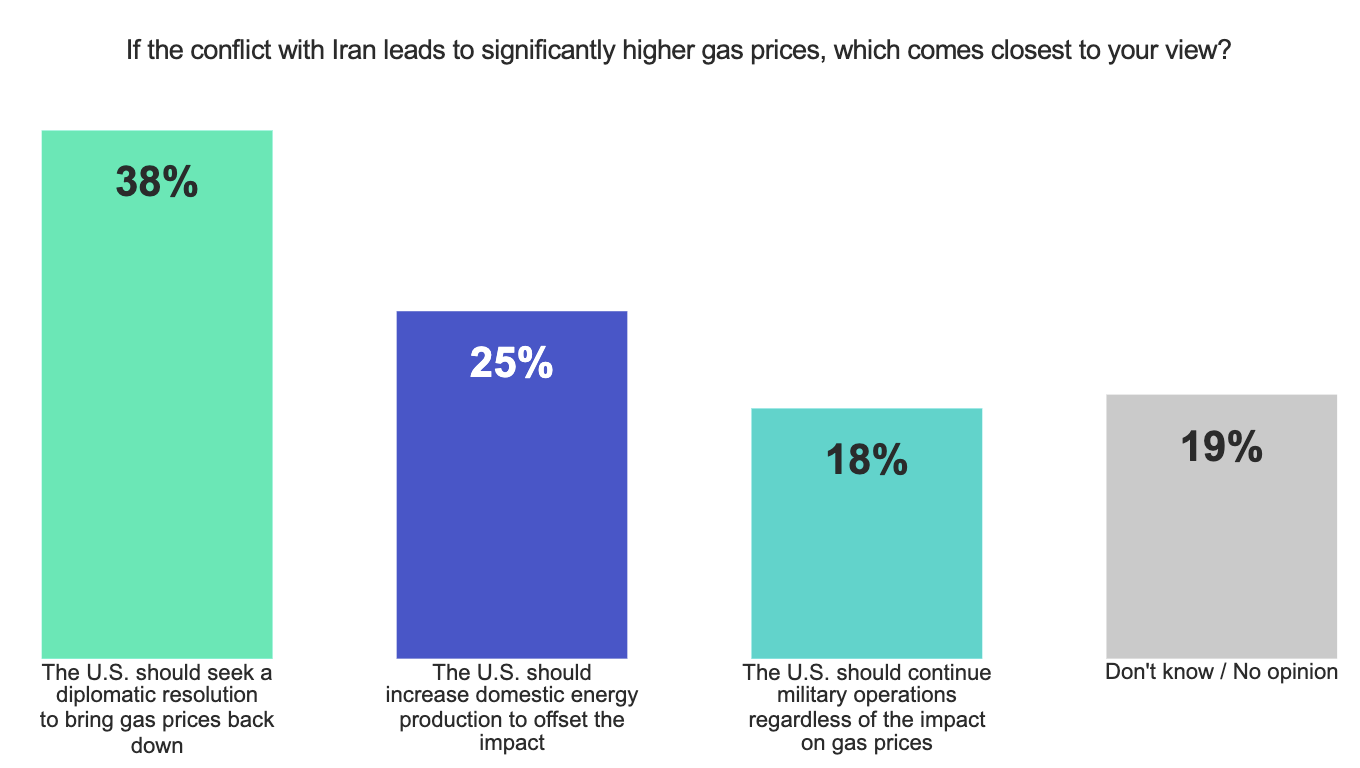
When the economic stakes are made concrete, support for continued military operations softens considerably. With 63% of voters already concerned about the impact of the conflict on gas prices, only 18% say the U.S. should press on regardless of the cost at the pump. A combined 63% favor either a diplomatic resolution or increased domestic energy production to offset price increases.
Voters Oppose Ground Troops in Iran
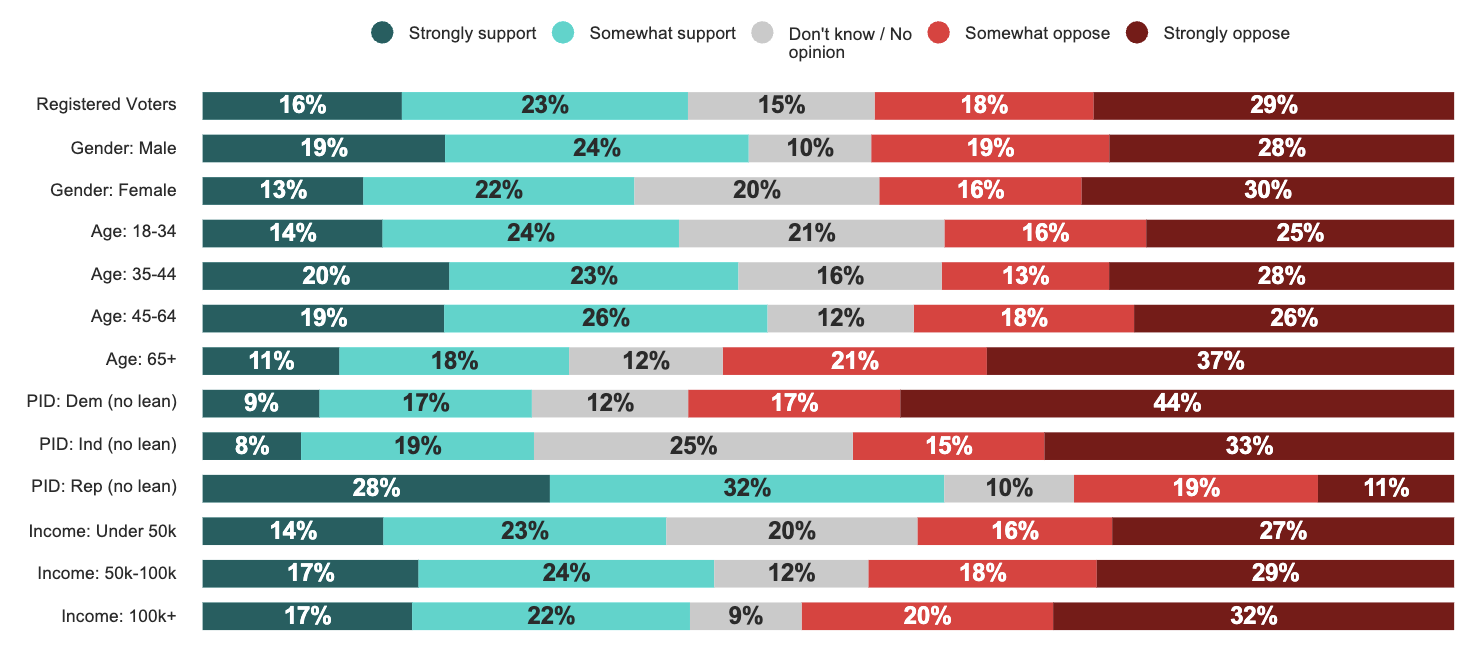
Opposition to deploying ground troops to Iran cuts across demographic lines. Overall, 46% of registered voters oppose sending ground forces, compared to 39% who support it — and even 30% of Republicans stand in opposition. Democrats, older voters, and higher-income households show the strongest resistance to a ground invasion.

Consumers Say Gas Prices Have Gone Up, and Blame Trump
Consumer Sentiment Falls As Gas Prices Spike — But Expectations Remain Anchored