

The populist economic agenda already has a supermajority, the question is which party figures that out first. Across 25 policies tested in a poll of 1,100 Americans on March 17-18, 2026, most policies clear 70% total support — and several approach 85% or higher.
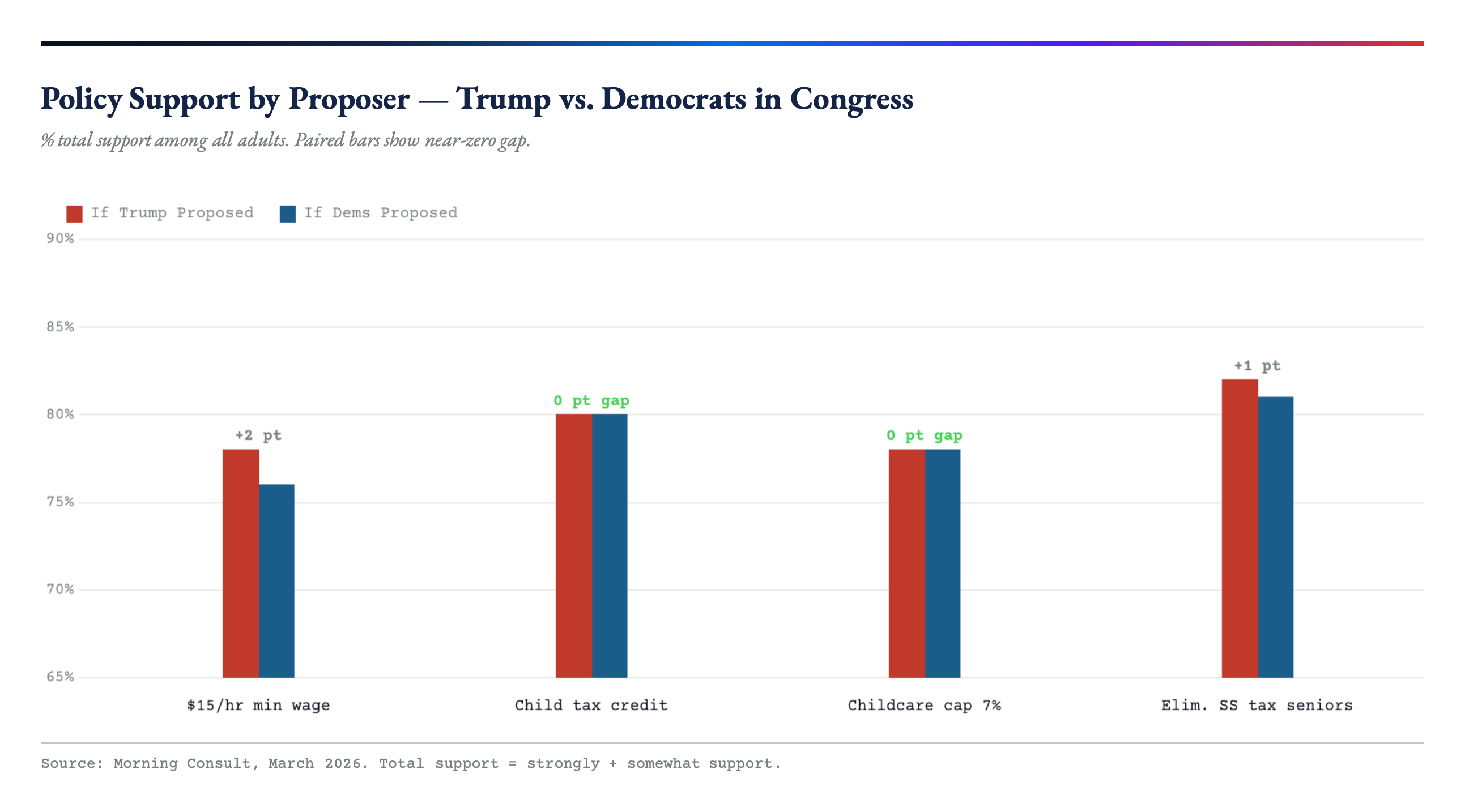
This isn't a partisan story, it's a consensus story, given how policy support barely moves based on who proposes it. The child tax credit hits exactly 80% support, whether President Donald Trump or the Democrats get the credit. Support for a $15 minimum wage increase commands strong support across partisan lines as well.
On health care costs, housing affordability, and financial fairness, Americans are not divided on whether something should be done. They want it, and our trust trends suggest it’s weakening the party in power ahead of the midterms.
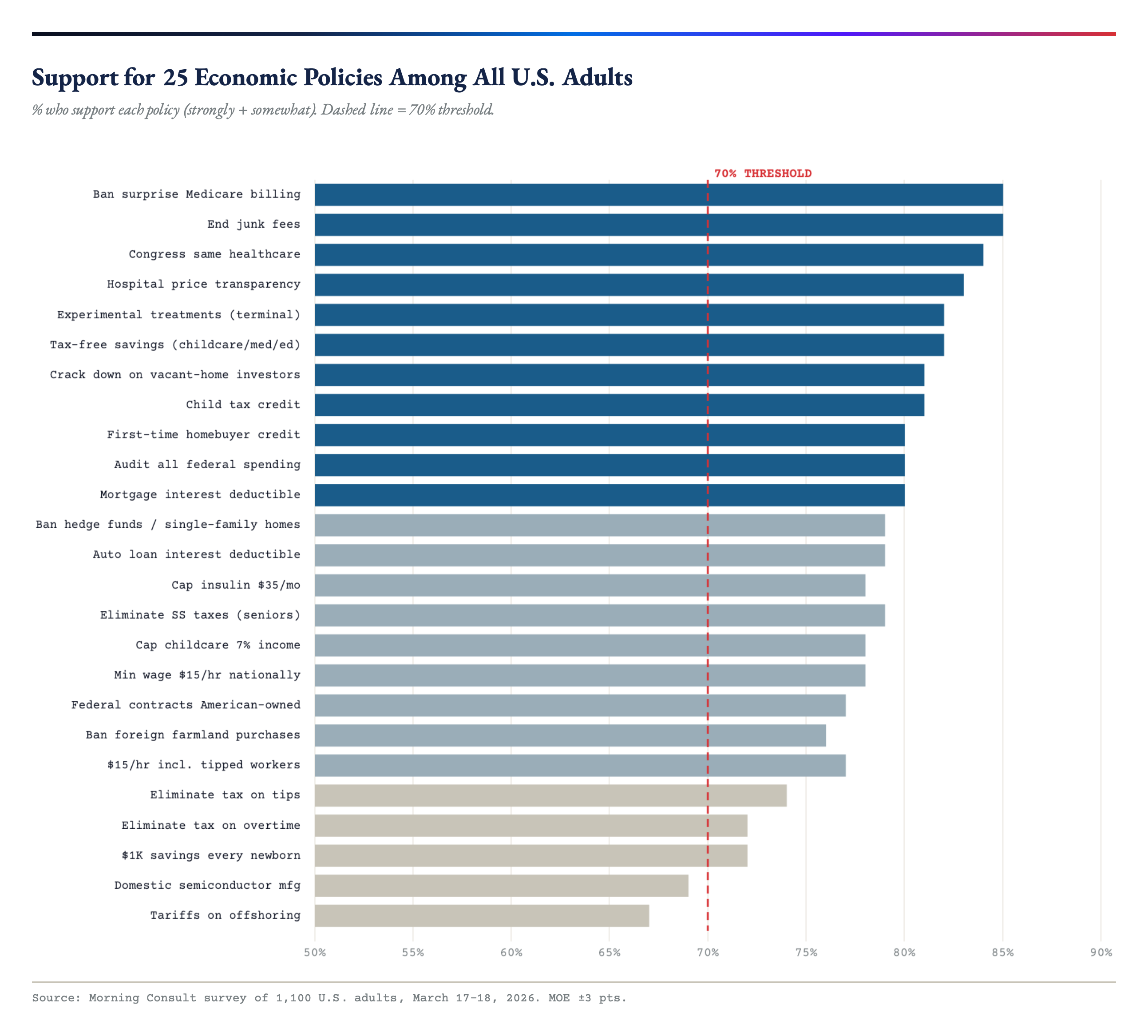
Near-Universal Support for Health Care Cost Reductions, Consumer Protections and Tax Relief
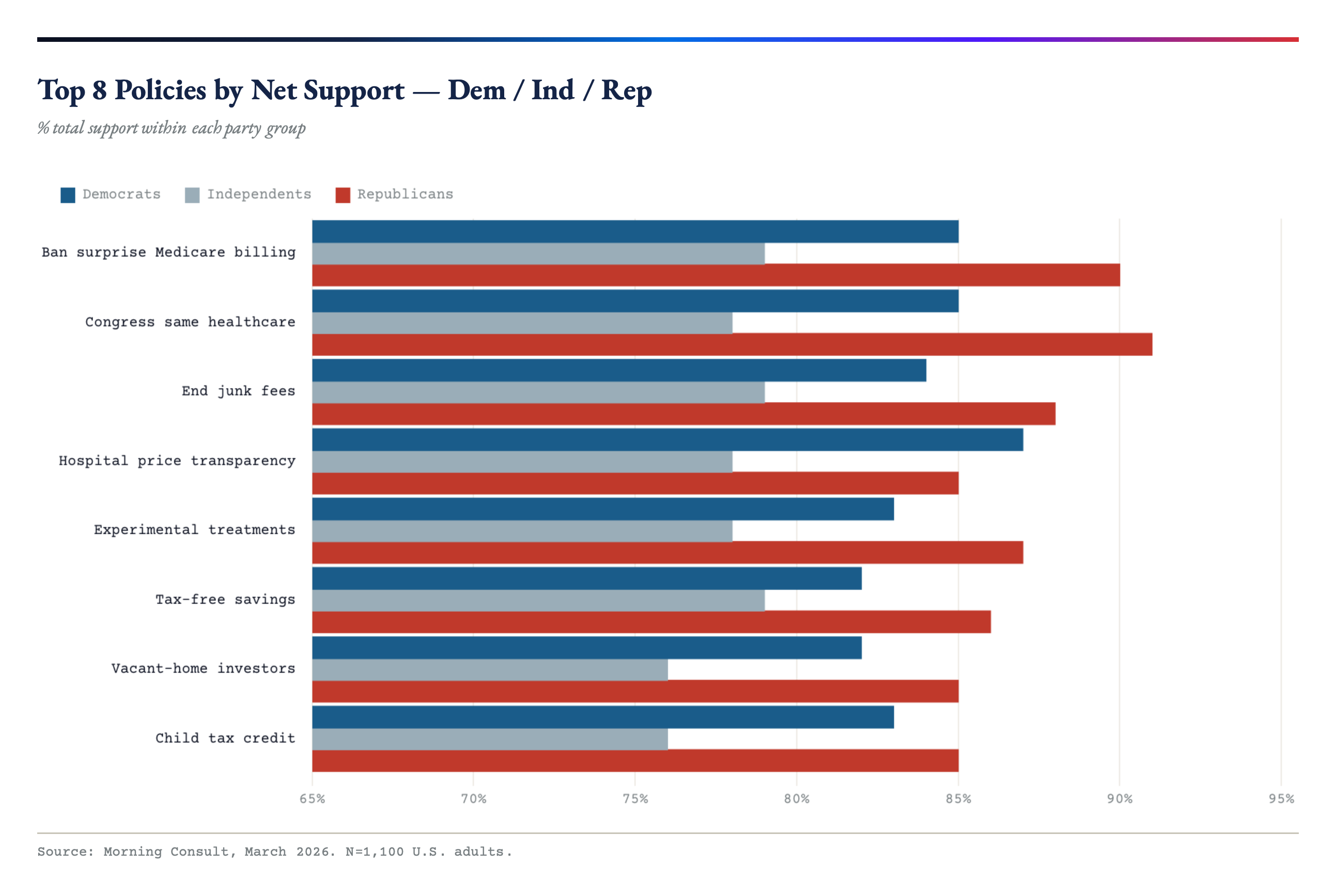
The top-ranked policies cut across traditional ideological lines. Banning surprise Medicare billing (85%), requiring Congress to live under the same healthcare plan as average Americans (84%), ending junk fees (85%) and mandating hospital price transparency (83%) each earn roughly equivalent backing from Democrats, Independents and Republicans.
Even policies with more traditionally partisan flavor — capping insulin prices, cracking down on institutional homebuyers — draw over 70% support from all three groups.
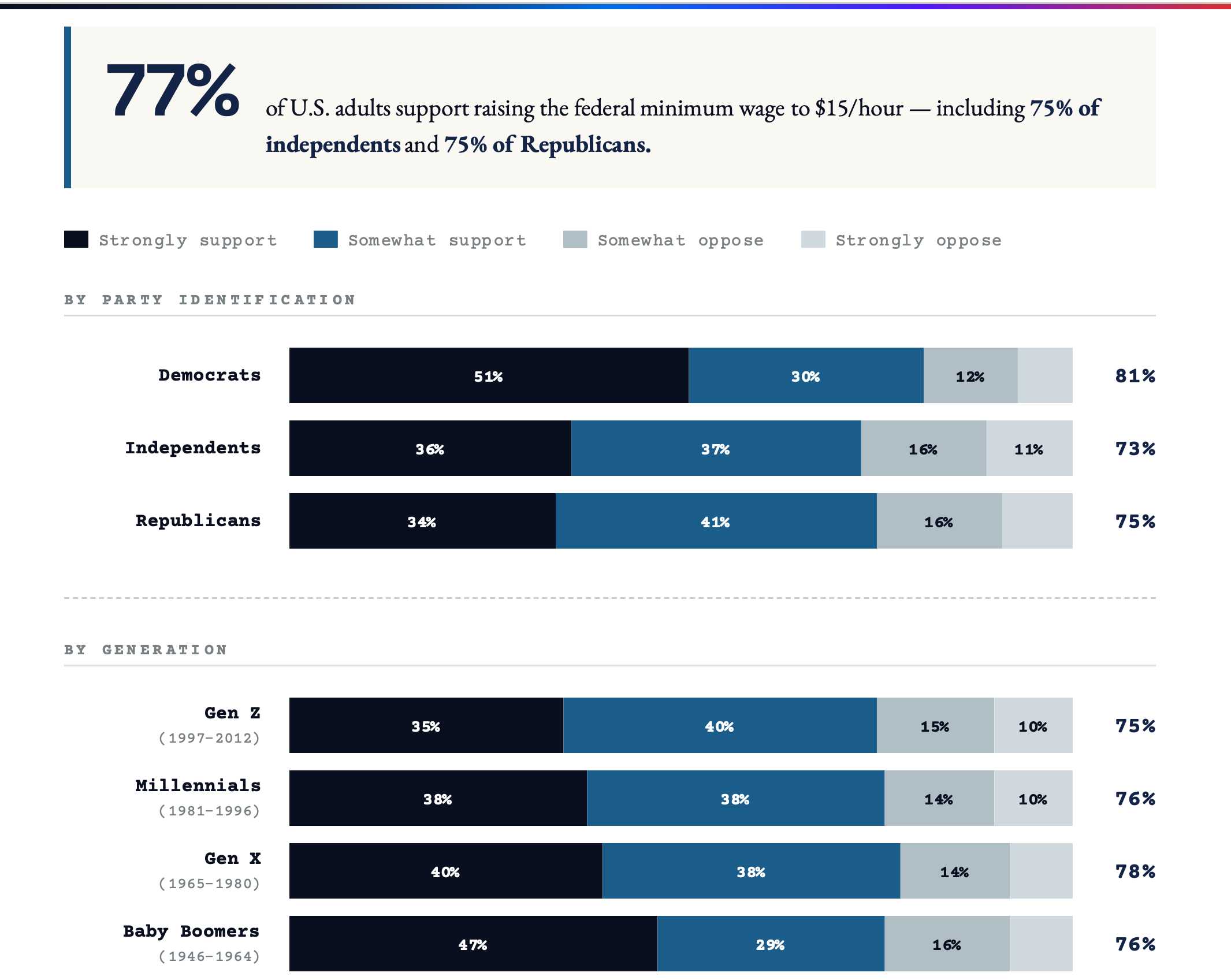
Three in four U.S. adults support raising the federal minimum wage to $15/hour for all workers, a level of backing that holds steady across party lines — including 75% of Republicans and 73% of independents. Support is also consistent across generations, ranging narrowly from 75% among Gen Z to 78% among Gen X, with Baby Boomers showing the highest intensity of strong support at 47%. Moreover, adults support raising the minimum wage for all workers, regardless of whether they are paid tips or not.
Support Barely Moves Whether Trump or Democrats Propose It
We tested four policies under both a "President Trump proposed" and "Democrats in Congress proposed" frame. The result: near-zero messenger effect on three of four policies. The child tax credit hits exactly 80% under both framings. Childcare cost-capping sits at 78% under both. These are policies whose popularity belongs to no one's brand. And, at least 75% support a $15 minimum wage increase among all workers regardless of whether it is proposed by President Trump or Democrats in Congress.
Trump's Policies Lead on Blame — But Corporate Greed Is the Cross-Partisan Answer
A 45% plurality of adults point to the Trump administration's current policies as the top driver of high prices — the single most-cited answer, with a stark partisan split. But corporate greed draws ~30% from across the political spectrum.
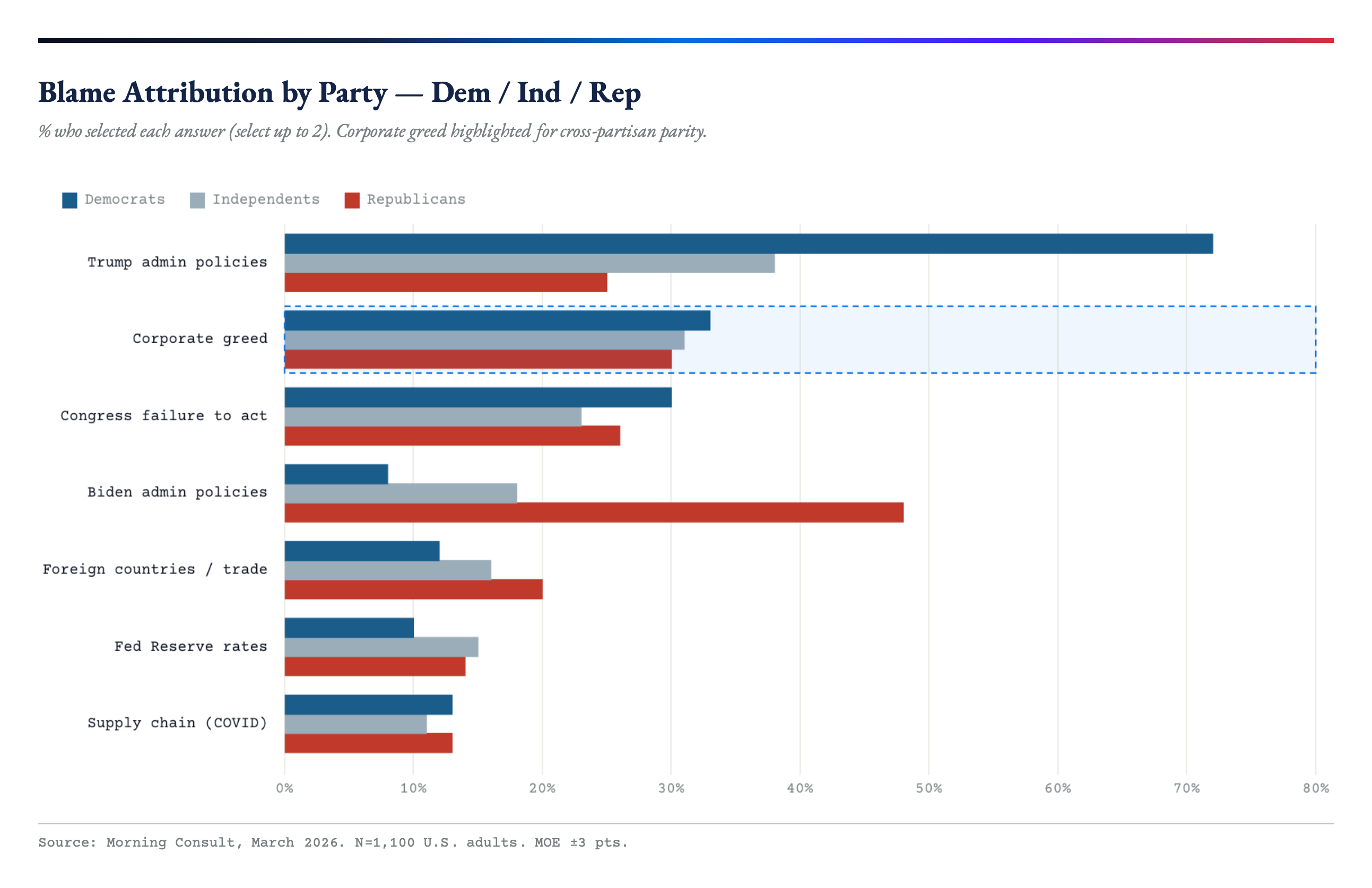
The bottom line: These numbers are a roadmap to the median voter ahead of the midterms, and as prospective candidates position for 2028.
Health care fairness, consumer protection and wage policy all clear 75% with Republicans included, meaning candidates who run on this stuff don't have to choose between base and swing voters. The framing experiment proves the messenger doesn't matter, which is bad news for any strategist banking on partisan branding.
For businesses, companies on the wrong side of things known as junk fees, surprise billing or housing speculation are sitting in an important juncture. Public opinion at this level can gain political momentum — the only variable is which party will do best to embrace it.
Morning Consult survey of 1,100 U.S. adults, March 17–18, 2026. Margin of error: ±3 percentage points.
Consumers Say Gas Prices Have Gone Up, and Blame Trump
.jpg)
What To Expect From a Second Energy Shock As the Ceasefire With Iran Ends
.png)