Your Consumer Data Has a Blind Spot
When demand shifts, most marketing and strategy leaders reach for the same scattered signals: headline sentiment numbers, government spending figures, maybe a category report. The problem is that none of those were built to answer the question you actually need answered — which is not what is happening to consumers in general, but what is happening to your consumers, in your category, right now.
We asked a room of senior leaders whether they knew if the current economic environment was hitting their core customers harder or softer than the average American. Most said the same thing: I have a general sense, but not hard data. That gap is costly in both directions. Miss a headwind and you walk into a pricing decision you are not ready for. Miss a tailwind and you leave opportunity on the table while your competitors take it. Here is what that looks like in practice.
A Real Example of How This Goes Wrong
A QSR brand is weighing a menu price increase. The business case is solid. Then military operations in Iran trigger a gas price spike, consumer sentiment drops to multi-year lows, and the question arrives on someone's desk: do we still proceed?
The macro read is unambiguous. Consumers are stressed. Confidence is falling. The obvious call is to hold off.
Except it is the wrong call.
When you run the full analysis, the picture reverses. Yes, consumer sentiment fell sharply. Yes, restaurant spending contracted in March. But for QSR specifically, price sensitivity actually decreased during the same period. Consumers were more willing to absorb higher prices at lower-priced restaurant formats, not less. Stopping at the macro level, or even the category level, would have left real pricing power on the table.
That is not a lucky read. It is what happens when you ask the right questions in the right order.
Why the Loudest Signal Is Rarely the Right One
Consumer trend data is everywhere right now. When sentiment falls or a macro shock makes headlines, it feels like you have your answer. But macro signals are context, not conclusions. They tell you what your consumers are experiencing. They do not tell you what they are doing in your category, or how demand is actually shifting in response.
Category-level consumer spending data gets you closer, but it can mislead in the other direction. A category-wide pullback can mask strength at the subcategory level, particularly when lower-priced options are benefiting from trading-down behavior during an economic squeeze. If you are a QSR brand and you are reading restaurant-level data, you are not reading your data.
The mistake is not looking at the wrong thing. It is stopping too early.
The Three-Step Framework
Morning Consult’s Consumer Diagnostic Framework is built on a simple premise: the signals that tell you what to do are not the same as the signals that tell you what is happening. You need both, in sequence, before you act.
Step 1: The Macro. Start with the economic environment every one of your consumers is living inside. This is where most organizations either skip ahead too quickly or rely on the wrong sources. Government economic indicators are lagged by weeks or months and offer almost no demographic granularity. They tell you what happened to everyone. That is rarely the question.
Morning Consult's Index of Consumer Sentiment mirrors the University of Michigan's survey methodology but runs daily, at a significantly larger sample size, and with the ability to cut results by the audiences that actually matter to your business: income groups, age cohorts, generation, region, and more. That distinction is not cosmetic. A sharp dip in sentiment among high-income households reads very differently than a broad-based decline, and it points to a different response. The Consumer Health Index goes a level deeper still, combining unemployment trends with consumer sentiment to give leaders an early read on whether overall consumer spending is expanding or contracting. It is designed to detect shifts sooner than lagged government reports allow.
This step provides the backdrop. In the QSR case, it showed clear deterioration following the gas price shock. But the Consumer Health Index remained above zero, signaling a slowdown rather than a contraction. That distinction matters enormously for what comes next.
Step 2: Your Category. Even when the macro looks manageable, consumer spending data can reveal that demand is shifting away from your category specifically. Morning Consult tracks share of wallet and year-over-year growth across more than 20 spending categories, and like the macro data, it can be cut by audience segment. That matters because category spending is rarely uniform. In the QSR case, restaurant spending overall was being driven heavily by high-income consumers. Understanding which segment is propping up your category, and how exposed you are if that segment pulls back, is a different question than tracking aggregate spend. You can only answer it if your data has the demographic depth to ask it.
The second signal here is Price Response Indicators (PRI), a monthly dataset that tracks how consumers actually respond to prices across more than 20 goods and services categories. When a consumer considered a purchase, did they go through with it, trade down to a less expensive alternative, or walk away entirely? Spending data tells you where money has gone. PRI tells you where it is heading and why. In the QSR case, this step confirmed that restaurant spending had pulled back in March, and that price sensitivity had risen for the restaurant category overall. The macro headwinds were real. But the category read was only part of the story, because the restaurant category is not one thing.
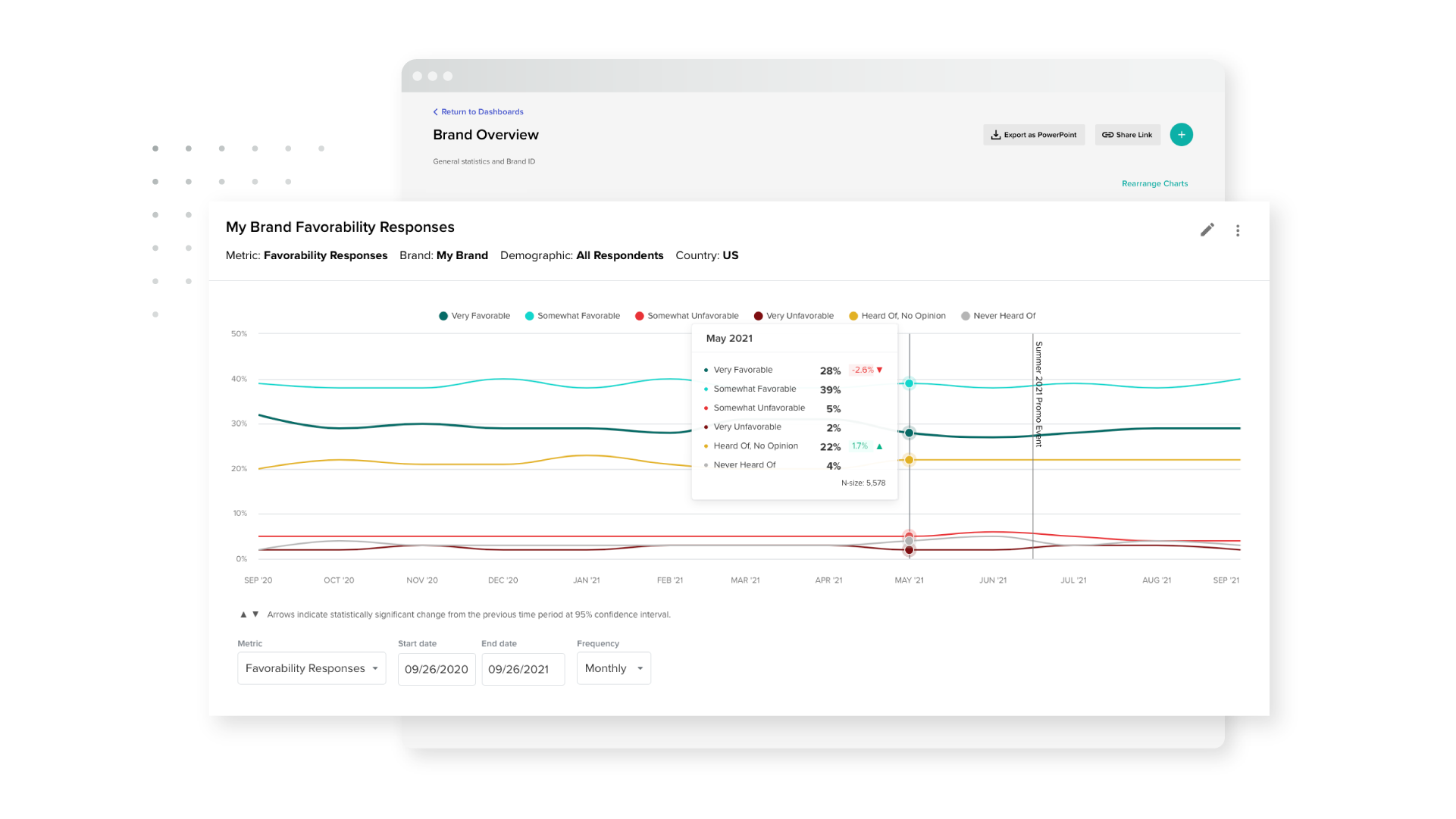
Step 3: Your Brand. This is where the analysis becomes actionable. The framework's final step asks whether what you are seeing at the macro and category level is actually showing up at your brand specifically, and how you compare to peers. Morning Consult's brand tracking covers awareness, favorability, purchase consideration, usage, and NPS across a wide range of tracked brands, giving you a competitive benchmark rather than a view in isolation.
In the QSR case, the brand-level PRI read is what reversed the answer entirely. While restaurant-level price sensitivity was rising, QSR as a subcategory was moving in the opposite direction. Consumers under economic pressure were not cutting fast food. They were trading down to it. And the specific brand in question was outperforming even the QSR average on price absorption. The right call was to raise prices. Without step three, that finding does not exist.
The Cost of Stopping Early
The most common version of this problem is not ignoring consumer market research. It is acting on incomplete information — stopping before the analysis is done and mistaking context for a conclusion.
The framework does not require more data. It requires a structured path through the data you already have, and the discipline to ask one more question before you act. The question is always the same: is what I am seeing a macro problem, a category problem, or something specific to my brand? Each answer points to a different response. Knowing which one you are dealing with is the difference between reacting to the economy and actually understanding it.
Get the Framework
Download the Consumer Diagnostic Framework, a one-page reference mapping all three steps, the Morning Consult datasets at each layer, and the business questions each one is built to answer.
Watch the Webinar
See the full Consumer Diagnostic Framework walkthrough, including a client spotlight from Pernod Ricard on how they use Morning Consult's economic data to track consumer demand, monitor category shifts, and inform decisions across a global portfolio of brands.
Get the Framework
Download the Consumer Diagnostic Framework, a one-page reference mapping all three steps, the Morning Consult datasets at each layer, and the business questions each one is built to answer.
You May Also Like
These Related Stories
Olive Garden Is the Most-Loved and Most-Considered Brand in Dining
.png)
State Farm’s Position is Enviable and Vulnerable Simultaneously