Download our Most Trusted Brands 2026 report here for the definitive ranking of the brands that lead the way on consumer trust — spanning 184 brands across 30 rankings.
Hotel spending hits a series high, but the pool of buyers is shrinking
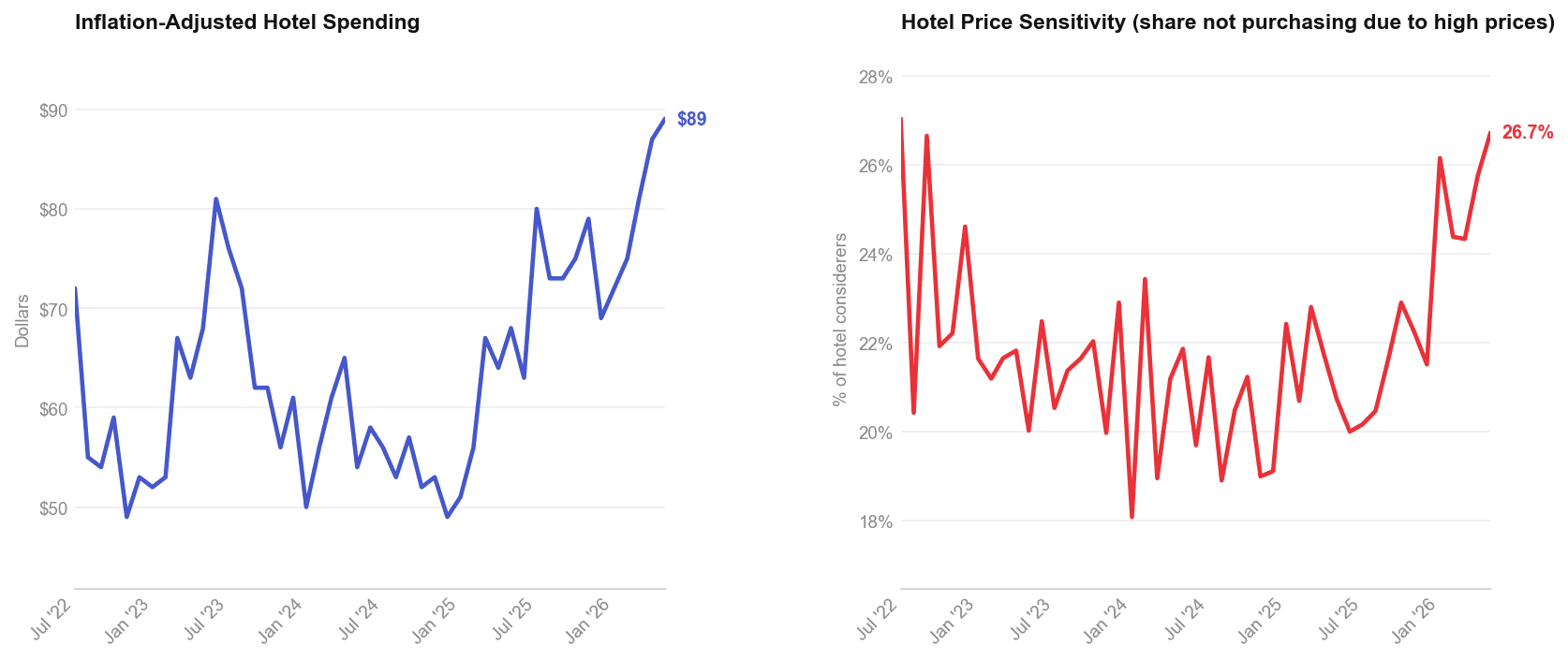
Morning Consult’s average consumer spending data on hotels reached a series high in May since tracking began, even after adjusting for inflation. At the same time, price sensitivity — the share of adults who passed on a hotel stay because the price was too high — was also just below the series high in 2022.
A growing share of price-sensitive consumers combined with higher average spending on hotels implies that the share of consumers purchasing hotels is shrinking, while those who are purchasing are spending more. The data bears this out: the share of adults who did not spend on hotels ticked up slightly by 1.2 percentage points year-over-year, to 73%, while among those who did purchase, the share spending $400 or more rose 7.7 percentage points, to 28%.
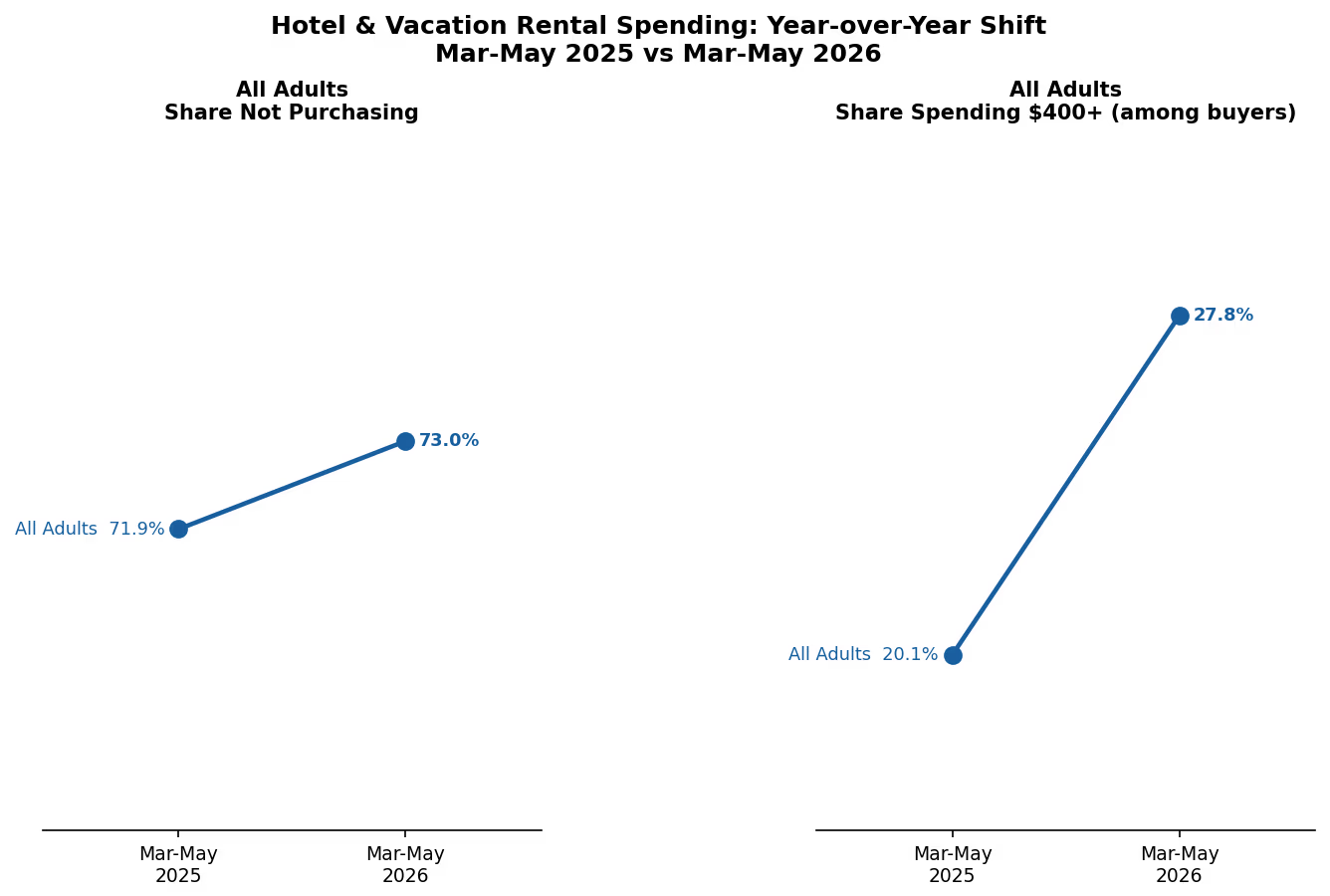
In other words, a shrinking group of committed hotel buyers is pushing average spending higher, while a growing group is increasingly priced out.
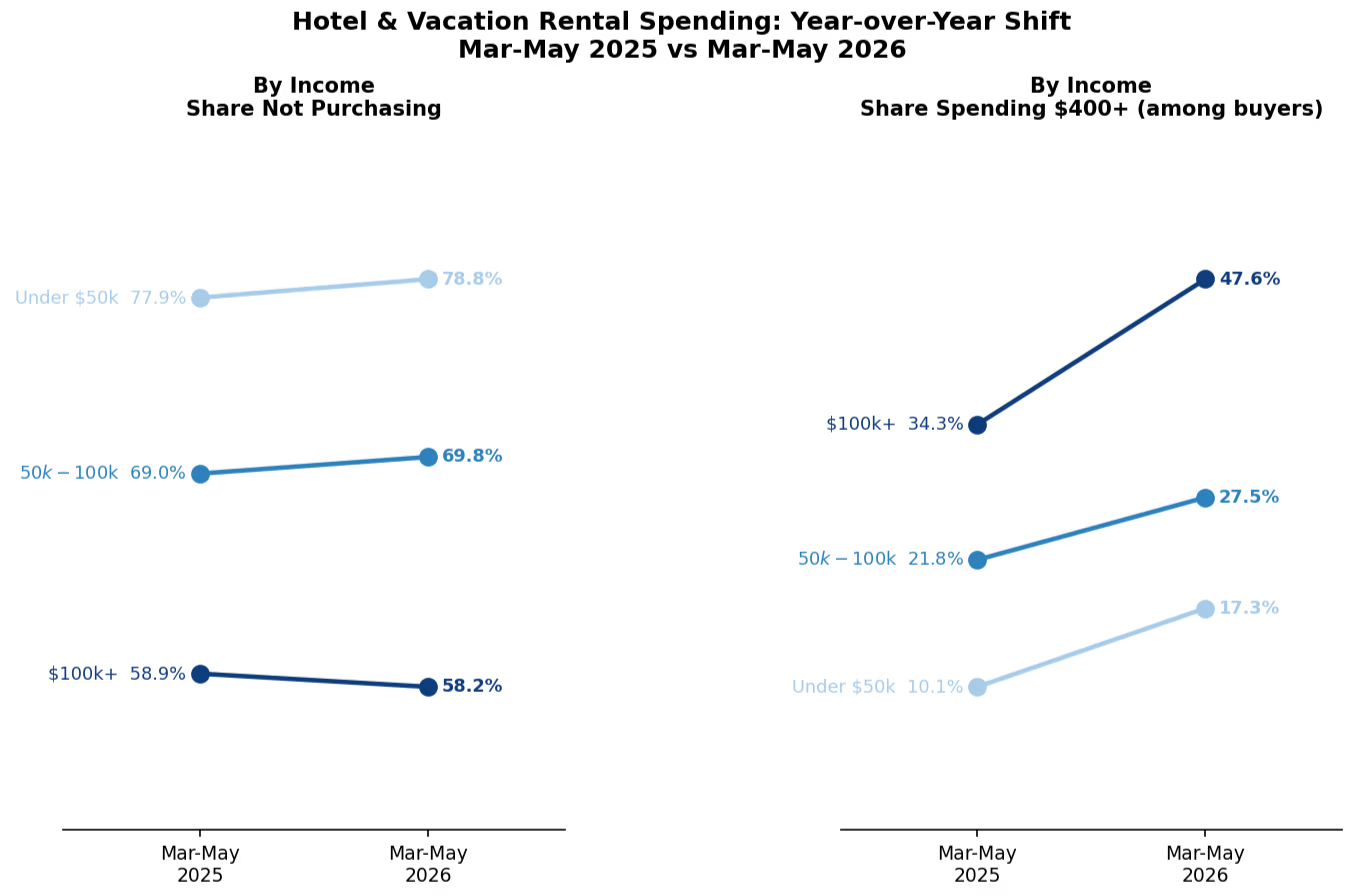
Looking at the demographic detail, the trend holds for low- and middle-income consumers: a smaller share are spending on hotels while a growing share is spending more than $400. On the other hand, high-income adults are both more likely to have spent on hotels and are experiencing the largest jump in spending more than $400 on hotels in a given month (+13.3pp jump), suggesting they’re less likely to be priced out and increasing their spending more widely.
Millennials and Gen Zers spend more on average, but older generations who aren’t priced out are the biggest spenders
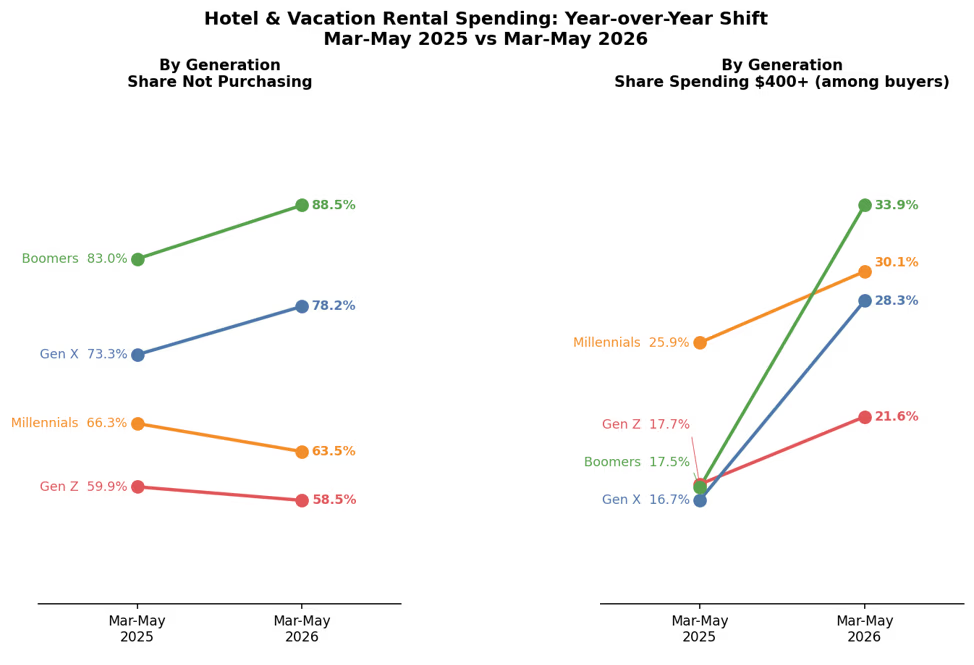
On average, millennials and Gen Zers spend more on hotels, and the younger generations have particularly pulled ahead in hotel spending in 2026. There’s also a growing share of millennials and Gen Zers who are reporting spending on hotels this year compared to last, with a larger share saying they spent $400 or more.
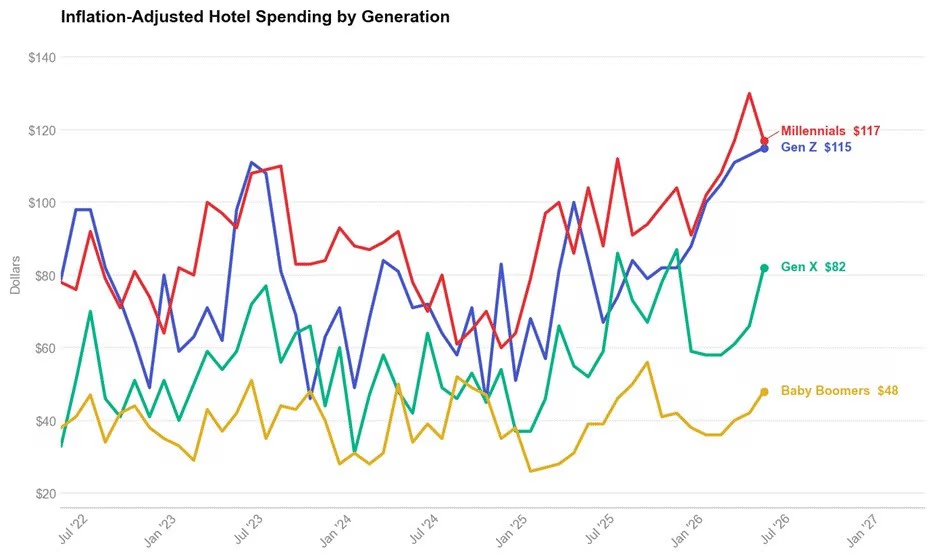
Among the older generations, there is more of a stark divide between those who are and aren’t priced out: Boomers and Gen X are exiting the market at the fastest rate, with non-purchase rates up 5.4 and 4.9 percentage points, respectively. Among Boomers and Gen X consumers who did make a purchase, however, the share spending $400 or more rose 16.4 and 11.6 percentage points. While the most price-sensitive older consumers are leaving, the ones who remain are splurging more.
The hotel category exemplifies the K-shape in action
73% of adults didn’t spend on hotels last month, up slightly from a year ago. Among those who did, nearly 3 in 10 spent $400 or more, up almost 8 percentage points from a year ago. Those who are spending more are driving the average spend of hotels up, while some consumers are dropping out of the market altogether. This is particularly true among older adults, who have had the largest increase in those not spending on hotels along with the biggest shift towards spending more.
With prices pinching budgets, especially for lower-income adults and those most price sensitive, hotels are most likely to become increasingly reliant on a smaller, wealthier customer base to sustain spending growth.
.png)
Perplexity AI: The Trusted Research Engine in Consumer AI
.png)
Enterprise AI for SMBs: How Google, OpenAI & Microsoft Compare in 2026