
Key takeaways
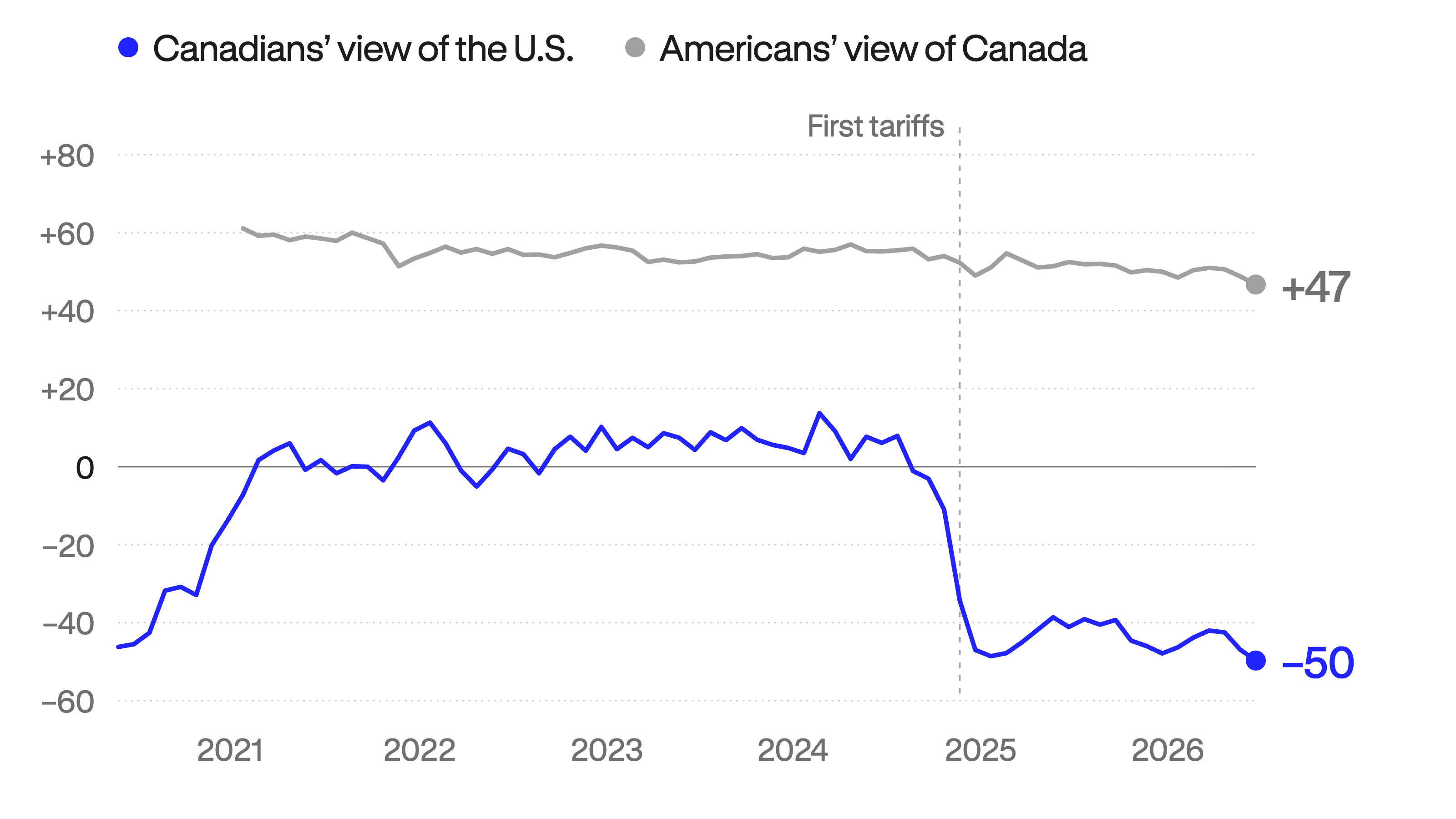
- Canadians are unwavering in their disdain for America: Canadians’ net favorability of the U.S. is −50, the lowest reading since tracking began in 2020.
- That has translated to persistently high boycotting rates: 65% of Canadian adults say they are boycotting U.S. products, second only to Switzerland among the 47 markets Morning Consult surveys.
- American brands have been impacted, but more modestly: Across a group of 27 prominent U.S. brands, average net favorability is about three points below its pre-tariff baseline.
- Consumer confidence is stable: The Index of Consumer Sentiment in Canada is below pre-pandemic highs but has never sustained a major lapse during Trump’s second term.
- Carney’s approval hit a new high following trade response: The Prime Minister’s hardline response is playing well, and his approval rose roughly 7 points over the last month to a new high.
The bottom line: Recent trade escalations have done little to shift the mood in Canada because the anger with Trump’s initial actions was so strong and never subsided. This resolute hostility, along with stable economic sentiment, provides the popular PM Mark Carney with space to hold the line on a potentially drawn-out conflict. While the average impact on opinions of U.S. brands remains more modest, the broader shift in outlook among Canadians is profound and unlikely to quickly resettle even if a deal is struck.
Canadians turned on the U.S. in early 2025 and have not turned back
Net favorability of the U.S. among Canadian adults stood at +14 in May 2024. By April 2025, as the first round of tariffs took hold, it had fallen to −49, a swing of more than 60 points in under a year. It has stayed in that range ever since. In early September, after talks collapsed, net favorability hit −50, the weakest since tracking began in August 2020.
The hostility runs one way. Americans still view Canada favorably by a wide margin: +47 so far in September, only a few points lower than before the dispute began.
Canadians remain deeply disdainful of the U.S.
Net favorability
Nearly two-thirds of Canadians are boycotting U.S. products
Morning Consult began asking Canadians in April 2025 whether they were boycotting U.S. products. That month, 70% said they were.
The share drifted lower over the following year but never fell below 63%, and it ticked up to 65% in early September as the new tariffs took effect.
Boycotting rates have remained stable since early 2025
Share of Canadian adults who say they are currently boycotting U.S. products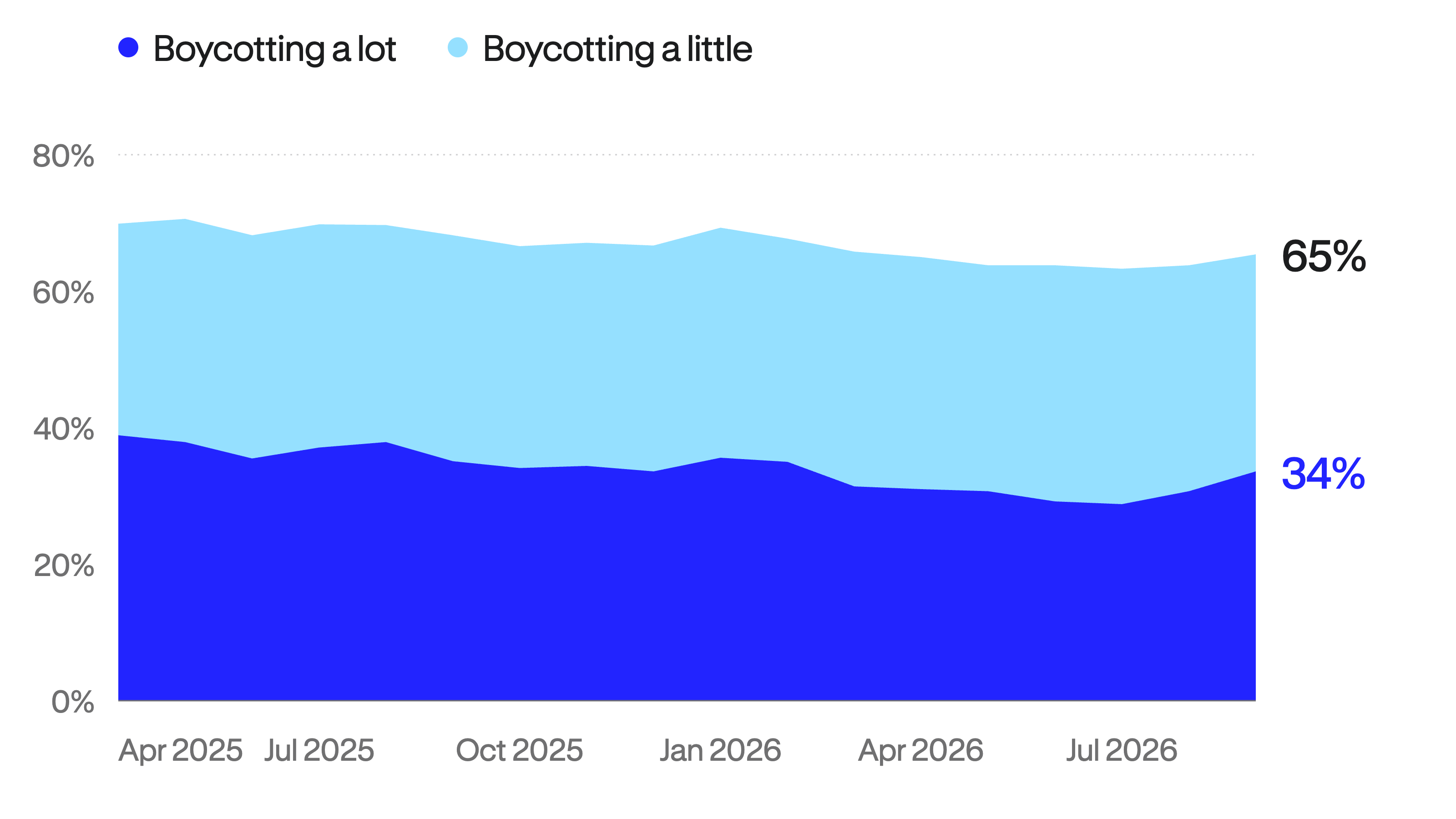
Canada’s rate is the second-highest of the 47 markets Morning Consult tracks, behind only Switzerland. Most markets sit between 30% and 50%.
Older and left-leaning Canadians boycott most, but every major demographic group is above 50%
Boomers are the backbone of the boycott, with over three quarters saying they are avoiding U.S. products and 43% say they are doing so “a lot,” more than double the share of Gen Z adults. Participation rises steadily with age: 54% of Gen Z, 55% of Millennials, 65% of Gen X, and 78% of Boomers.
Ideology is the other sharp divide. Among Canadians who place themselves on the left, 78% are boycotting, against 64% in the center and 55% on the right. Even so, no major group falls below a majority, including younger adults, right-leaning Canadians and households earning under C$50,000.
The cost to U.S. brands
Morning Consult tracks the perceptions of hundreds of U.S. brands in Canada daily. Across a group of 27 prominent U.S. brands with continuous tracking since 2023, spanning a wide range of categories, average purchasing consideration fell from 43% before the tariffs to 39% at the low point in May 2025 and has since settled at around 41%. Average net favorability followed the same path, dropping from +47 to +43 and recovering only to +44.
A similar group of Canadian-owned brands tracked over the same period were essentially flat.
U.S. brands took a modest hit in 2025 that has yet to reverse
Averages across 27 prominent U.S. brands tracked in Canada, monthly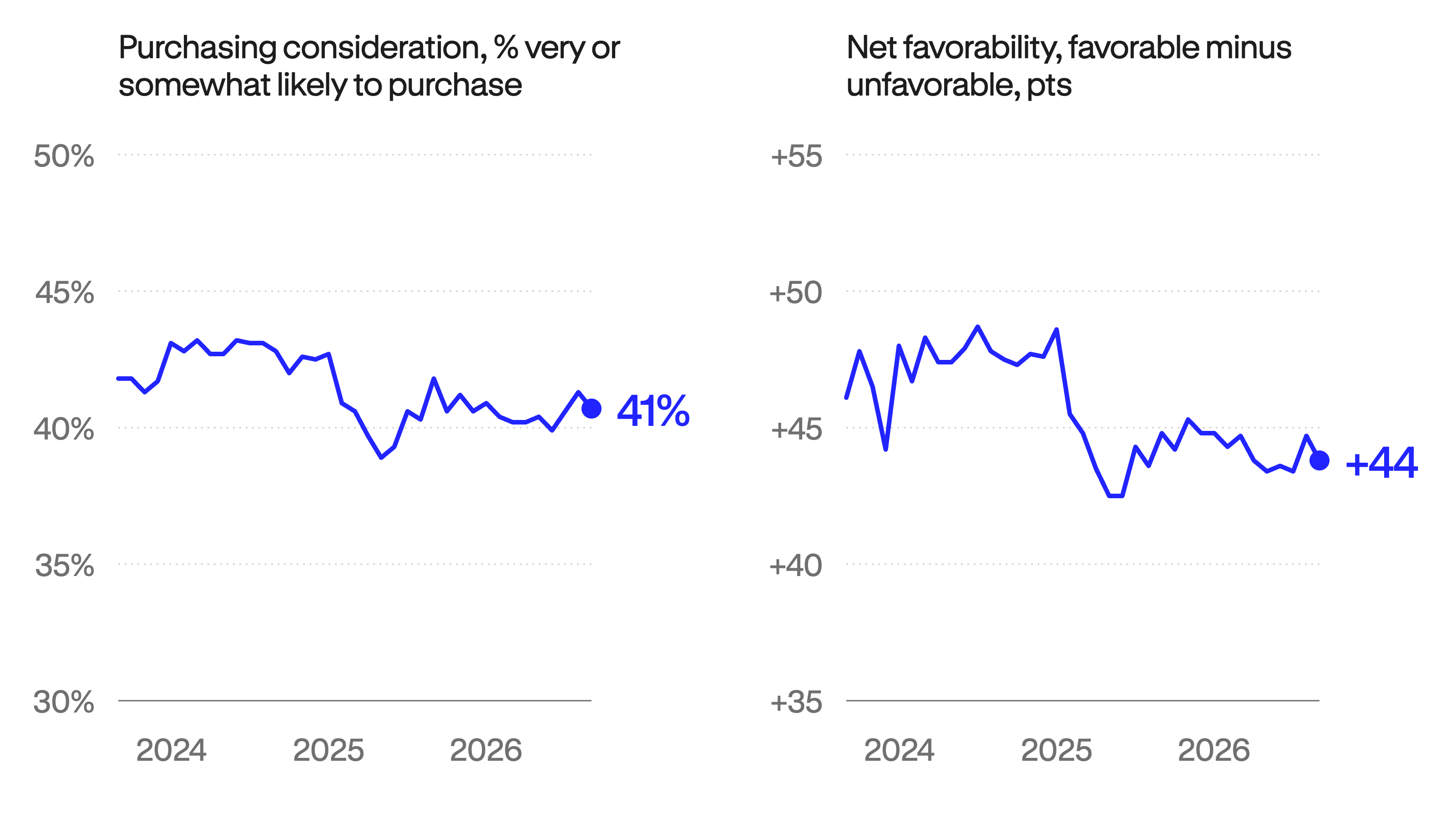 Unweighted average of brand metrics for: Airbnb, Amazon, Apple, Budweiser, Coca-Cola, Costco, Disney, Doritos, Ford, General Motors, Google, Heinz, Hilton, Johnson & Johnson, Kellogg’s, KFC, Kraft Heinz, Marriott, McDonald’s, Netflix, Nike, Pepsi, Starbucks, Subway, Uber, Walmart, and Wendy’s.
Past Morning Consult analysis has shown that when consumers sour on America, they take it out on U.S. brands selectively. The average hit is modest and the damage is concentrated where Canadians can easily substitute. To better understand the impact, U.S. companies need to monitor category and brand-level data along with this macro context.
The economic and political backdrop
Morning Consult’s Index of Consumer Sentiment for Canada stood at 76 in August, inside the 70-to-80 band it has occupied since mid-2022 and well below its pre-pandemic level in the low 90s. The first tariff shock took more than six points off the index between January and March 2025, but sentiment had fully recovered by August.
Canadians have stable, not strong, consumer sentiment
Morning Consult Index of Consumer Sentiment, Canada, monthly average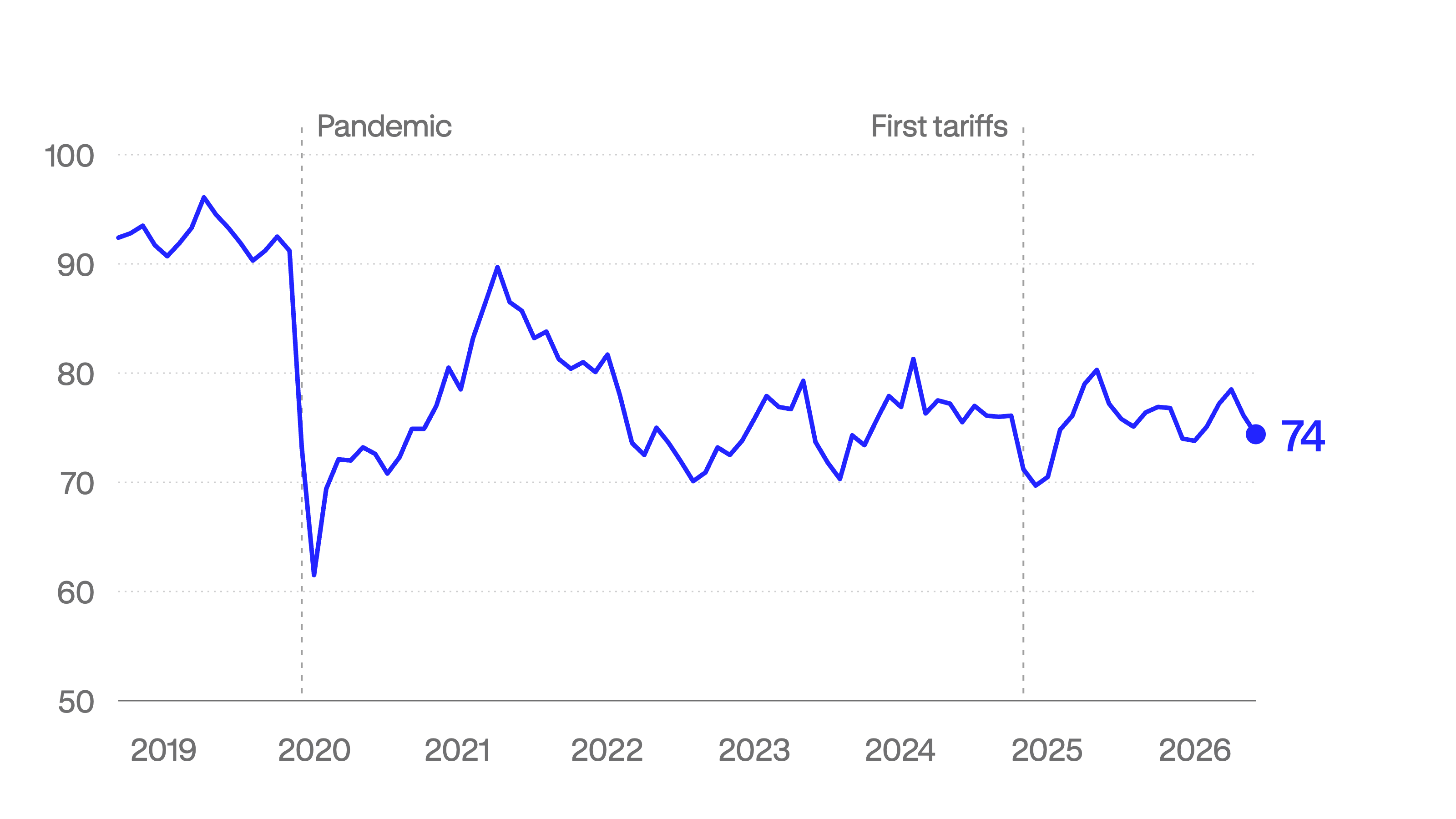
Underneath the topline figure, two in five Canadians say their finances are worse than a year ago, and expectations for business conditions over the next 12 months remain net negative, both little changed from a year earlier.
Whether this stability in mood continues is a key factor in determining the space Prime Minister Mark Carney has to continue taking bold retaliatory action, and whether the public is ready to withstand the economic pain that will lead to. Thus far, Canadians are giving him a clear mandate: Carney’s approval rating has surged by 7 percentage points over the last month to 59%, the highest mark of his term.
Carney’s approval hits record high following hardline rebuttal of Trump
Share of Canadian adults with a favorable and unfavorable opinion of Prime Minister Mark Carney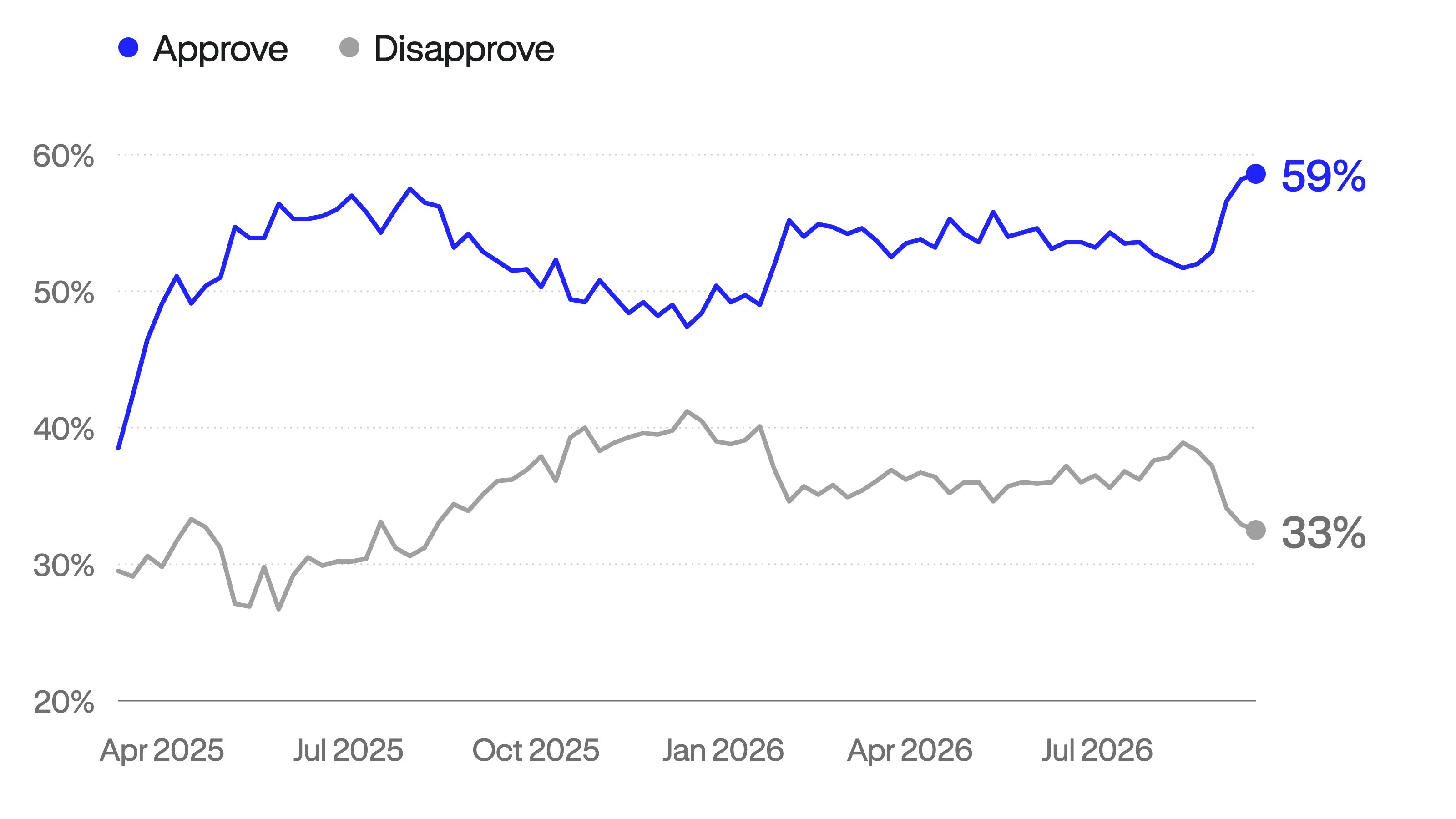
The Political, Economic and Brand Context To Drive Your Strategy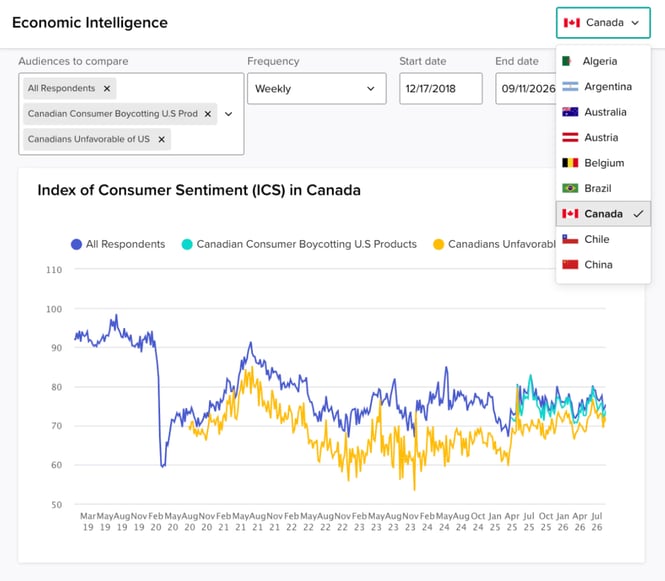
All the data in this analysis comes from Morning Consult Intelligence's daily tracking, including:
Brand tracking: Thousands of brands tracked across over 50 markets on metrics such as favorability, trust and purchasing consideration.
Consumer behavior: From boycotting rates to car purchase decision-making, the broader context on what's shaping trends.
Economic sentiment: Daily reads on how consumers feel about their finances, the broader economy, and where things are heading.
Political context: Tracking of political leader approval, perceptions of other countries and ideological movement.
.
.png)
Why Circle K Is #2 Amongst U.S. Gas Stations
-1.png)
Gemini Is No Longer Competing With ChatGPT For the Same Lane. It's Winning a Different One.
.png)